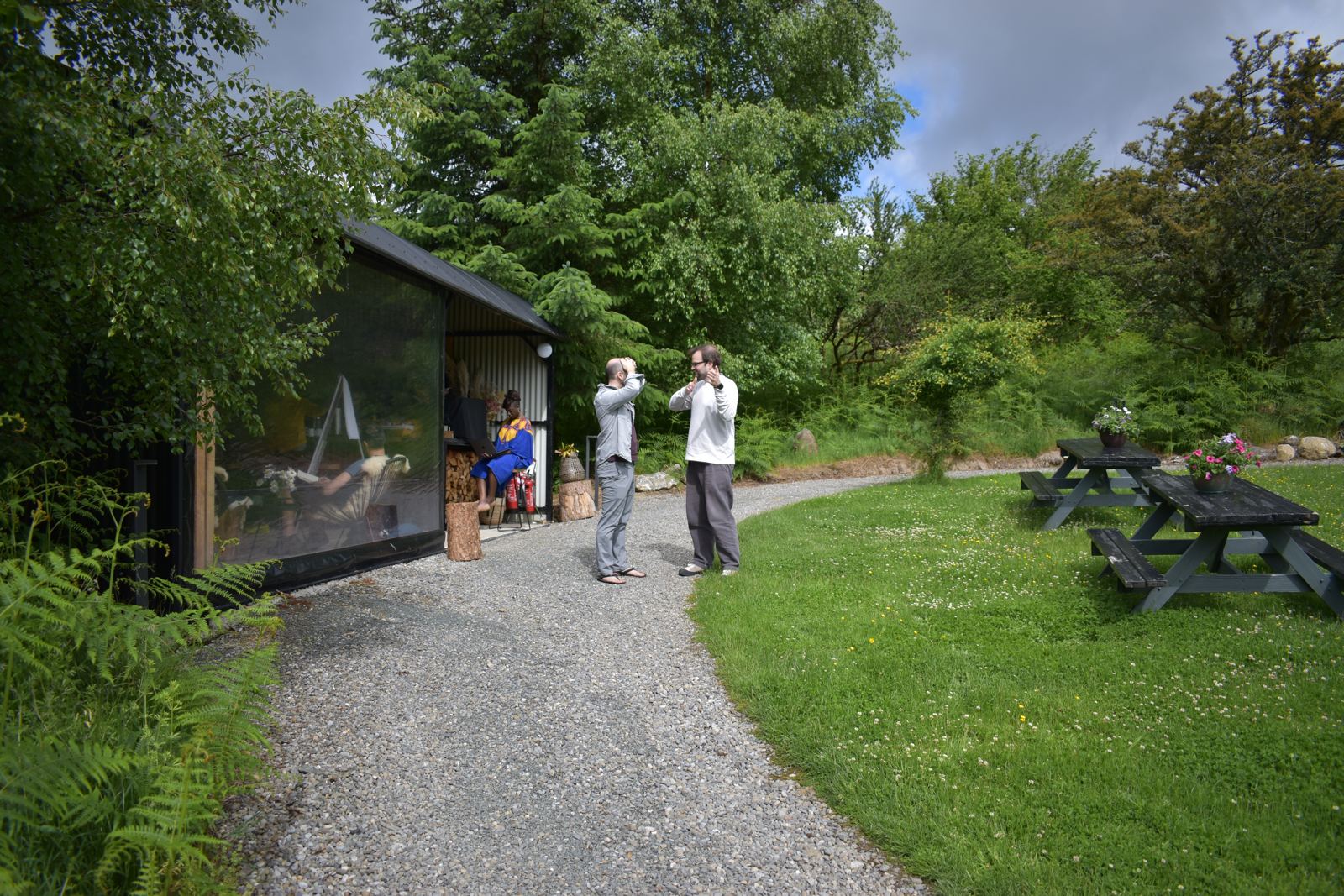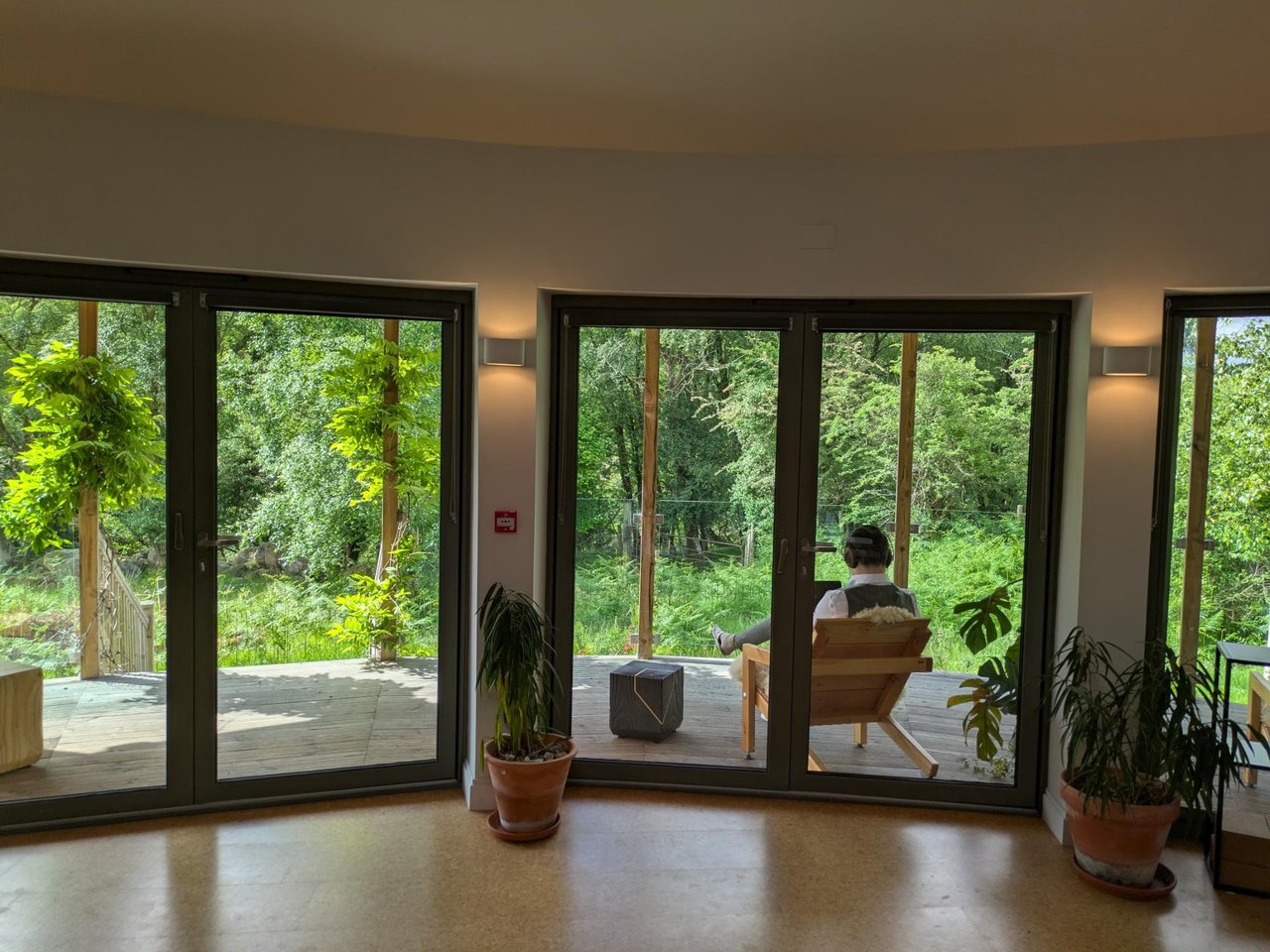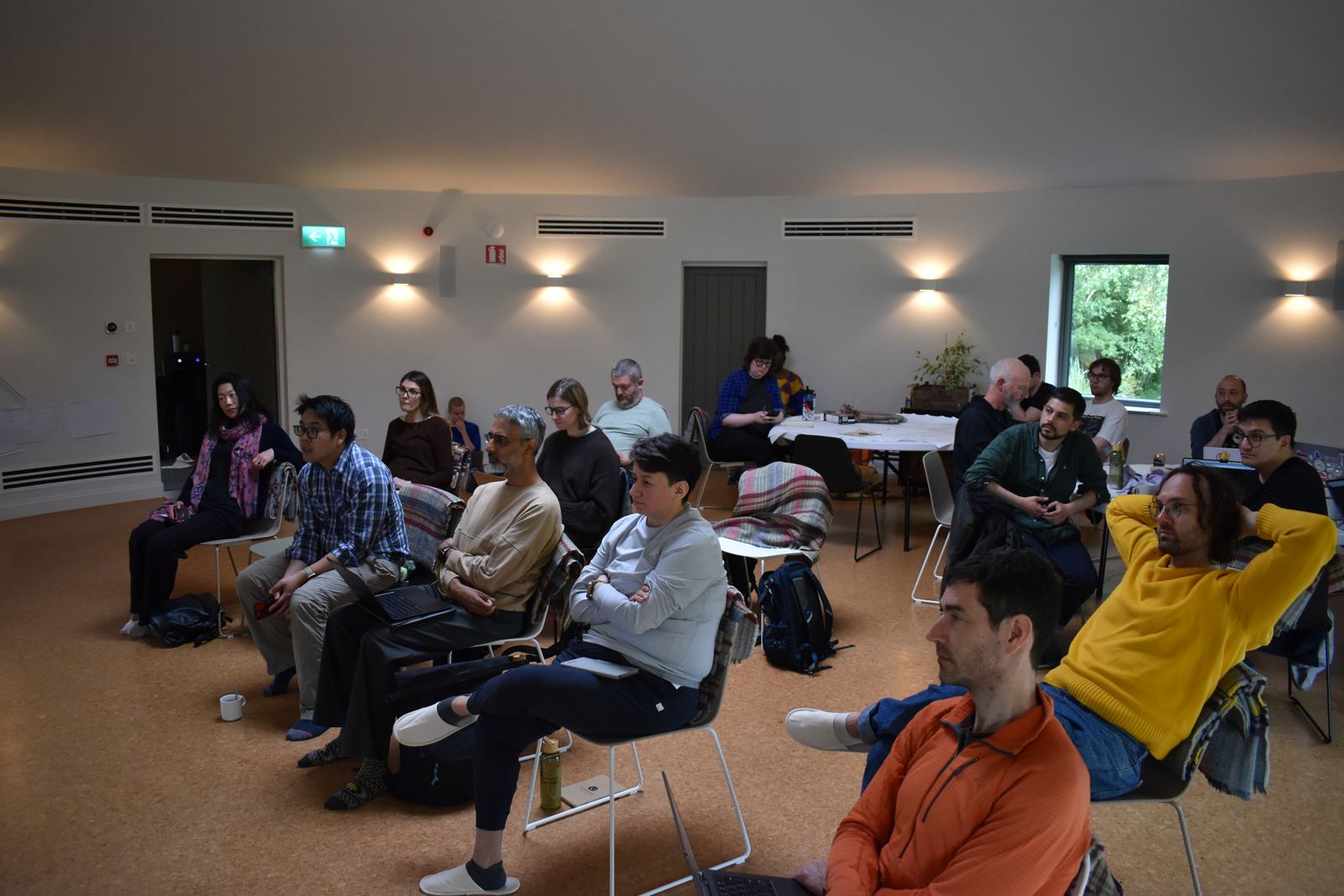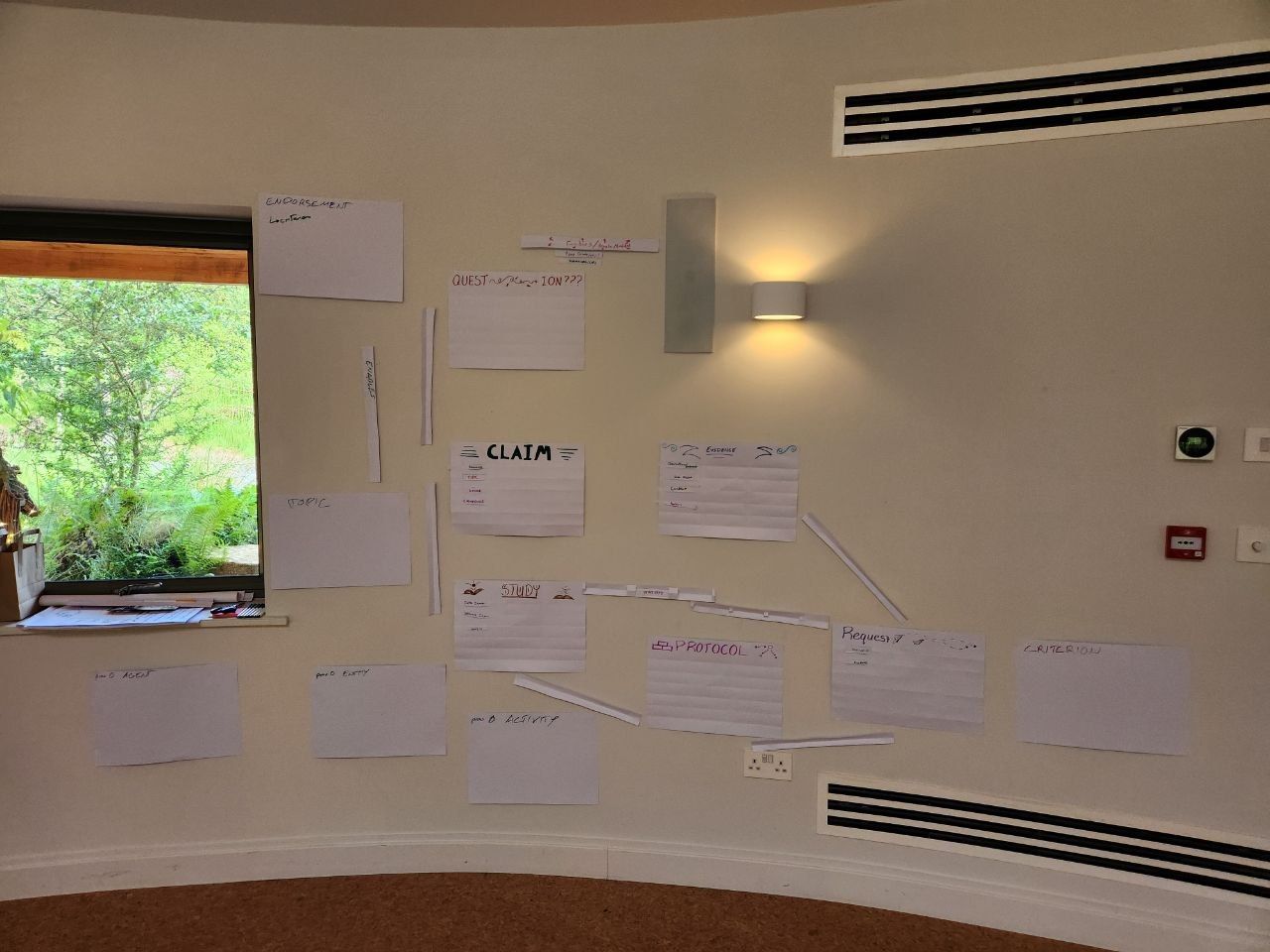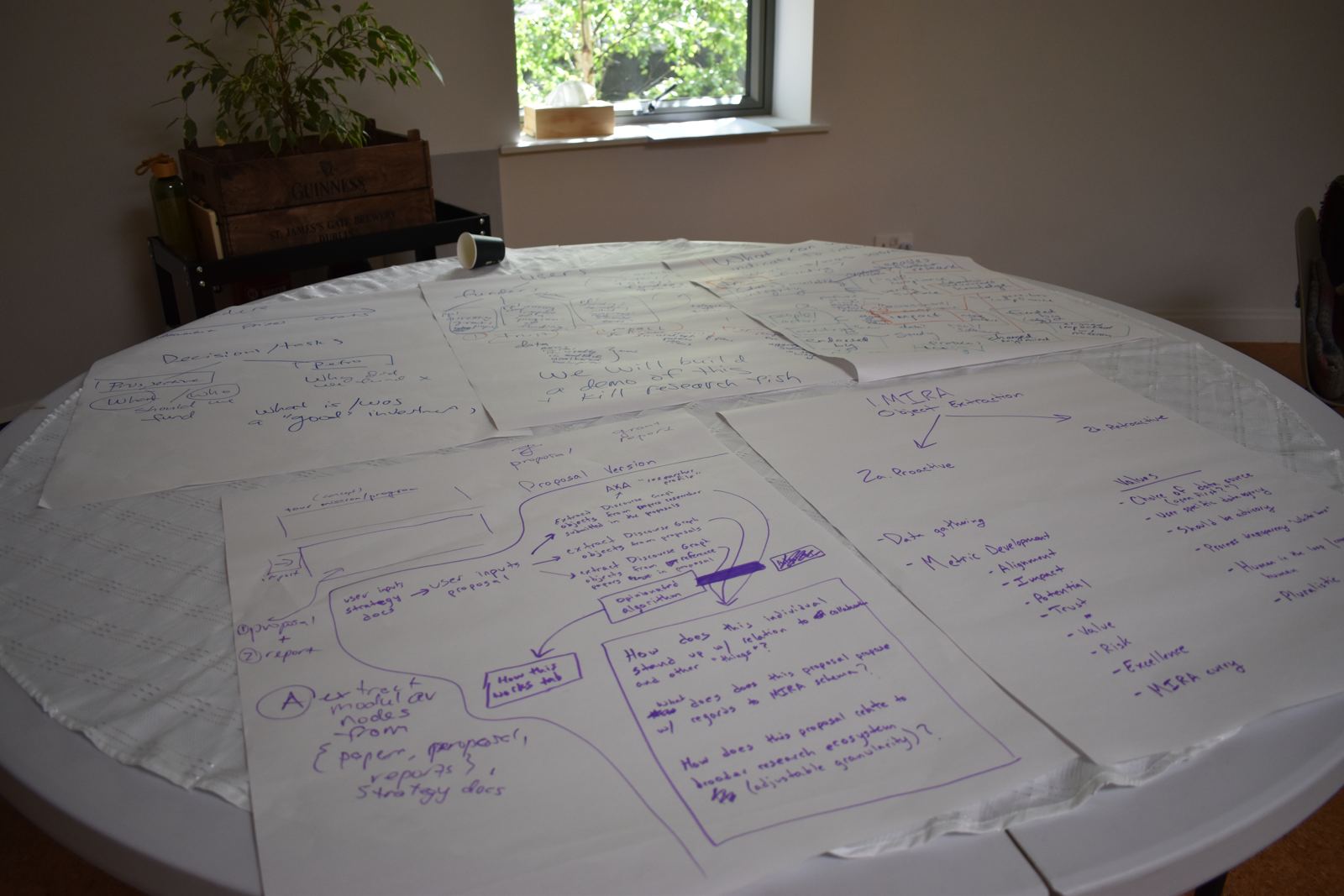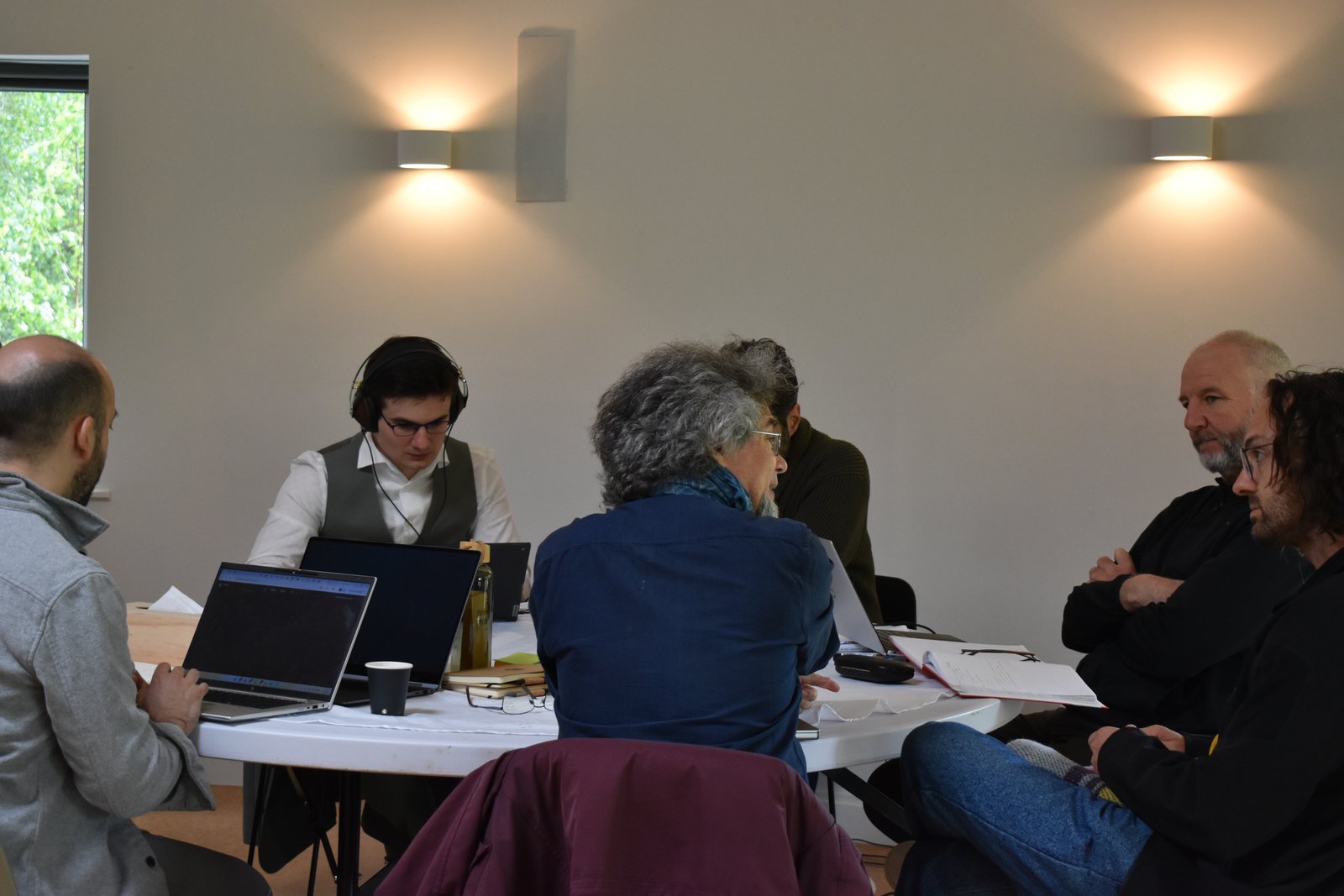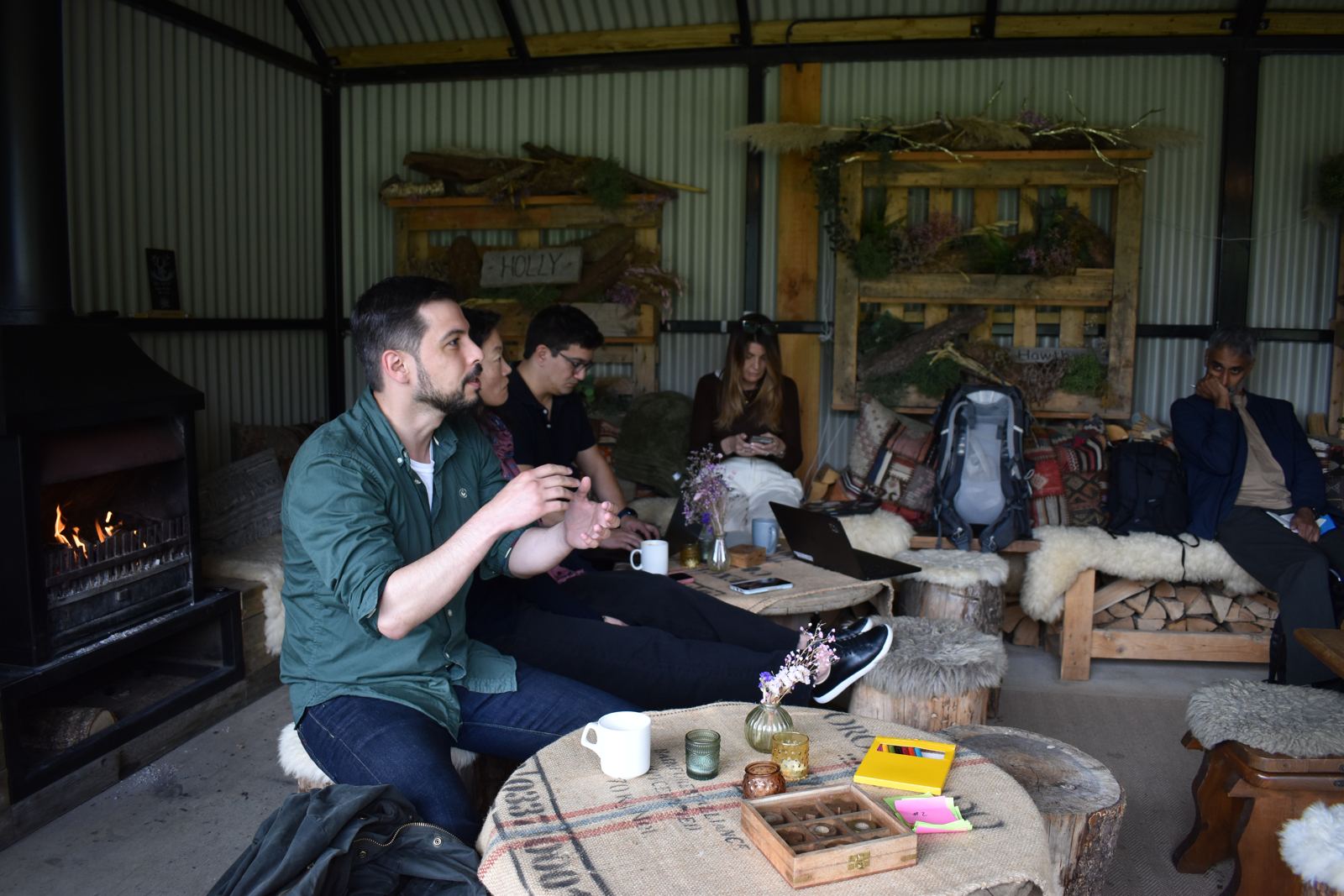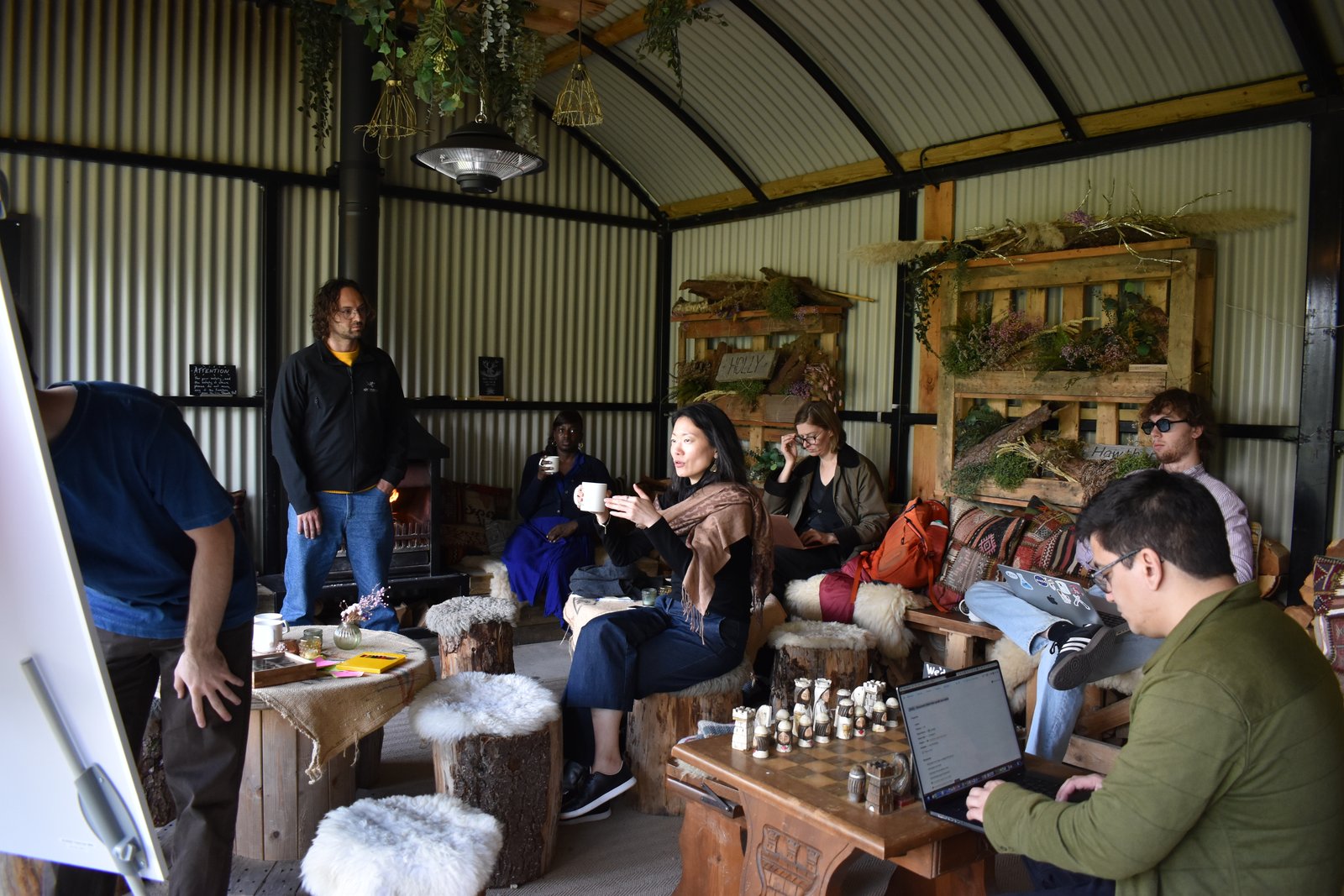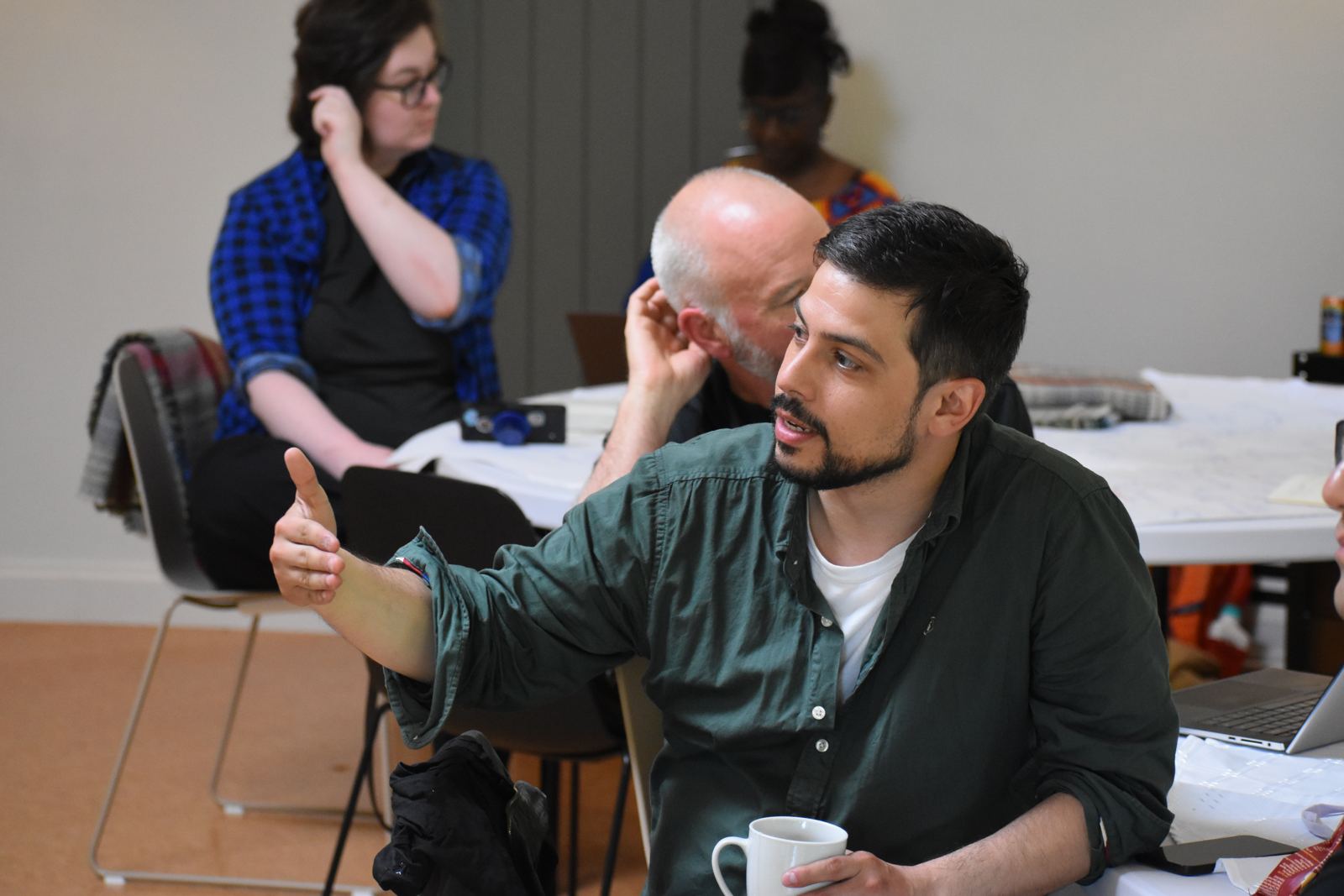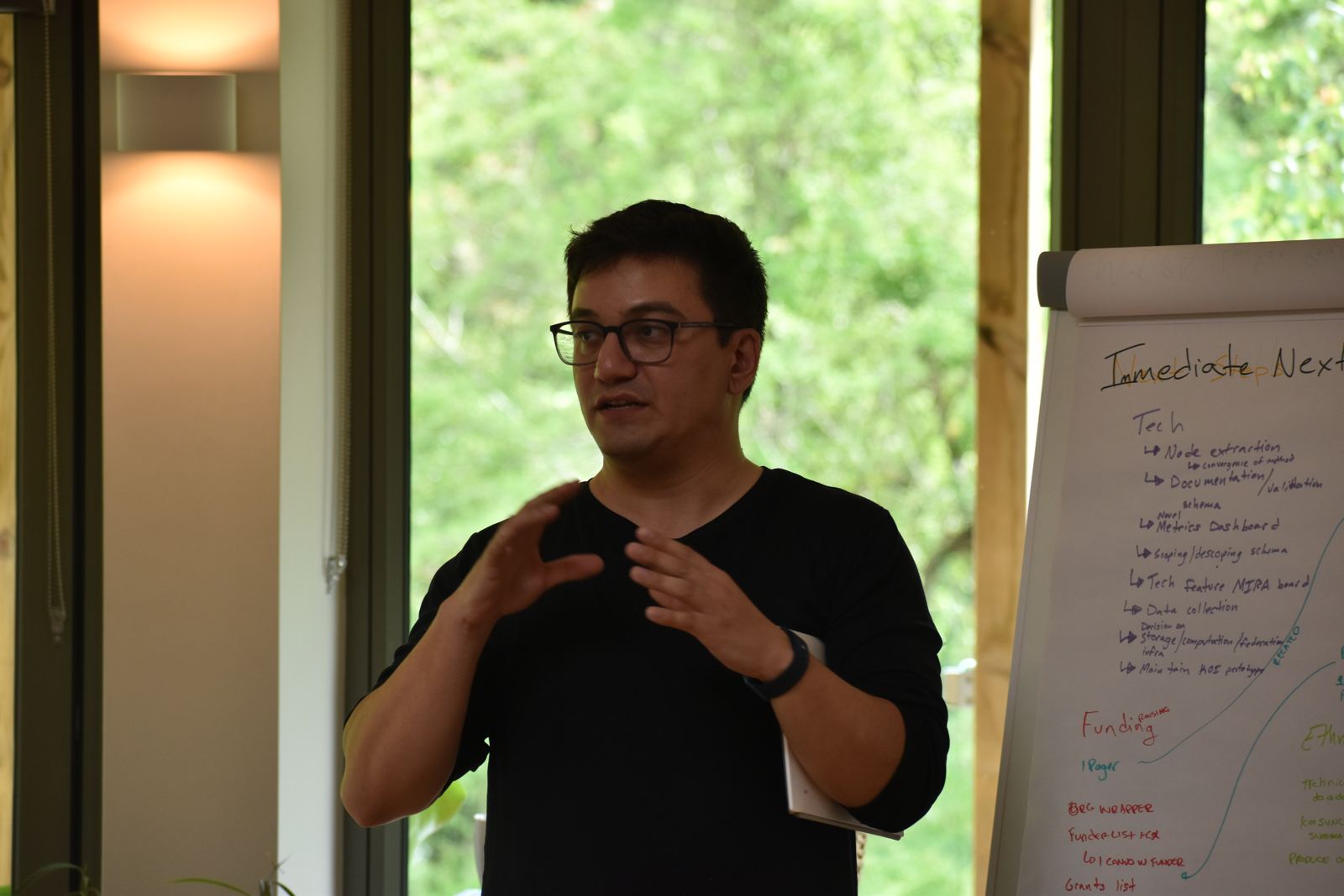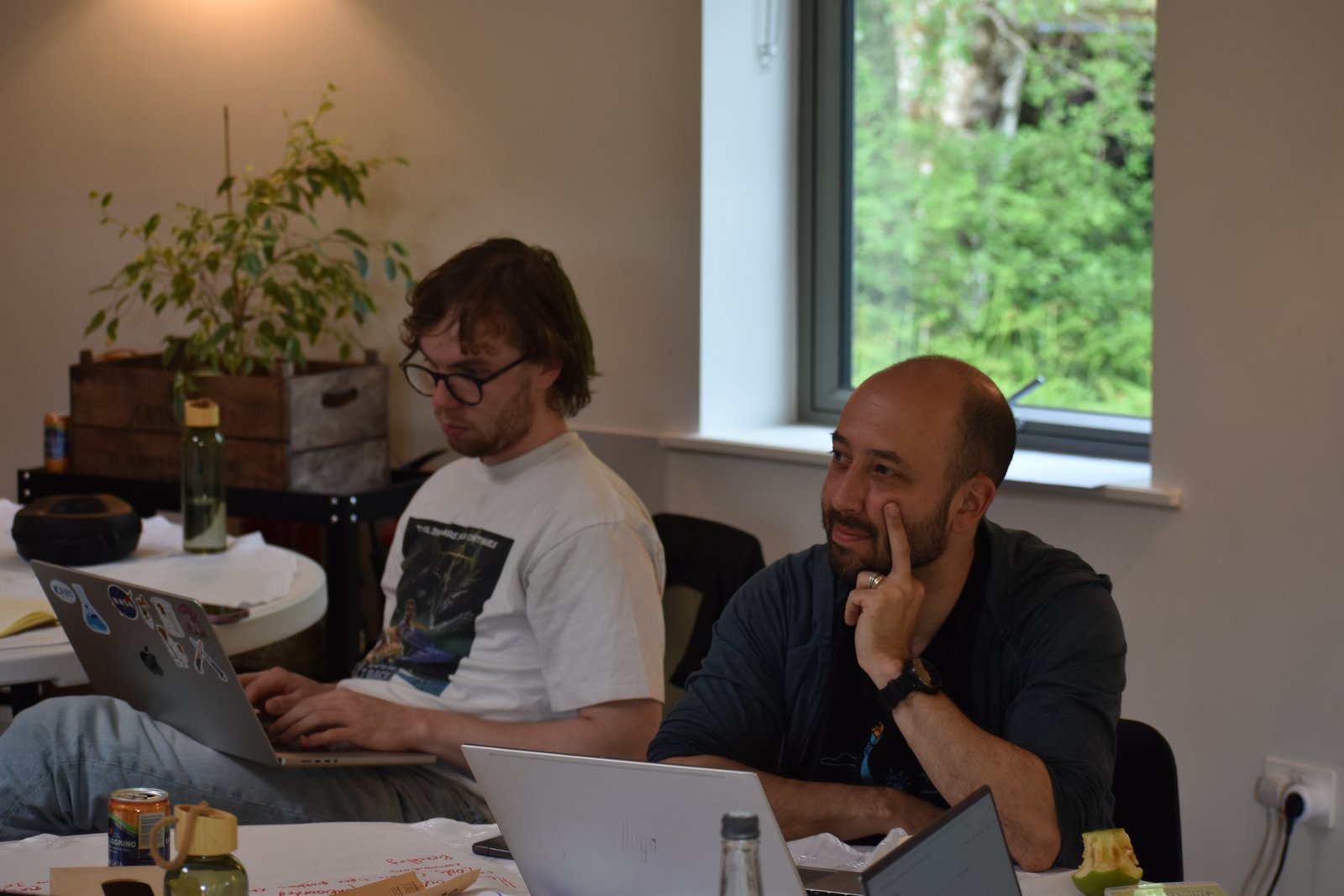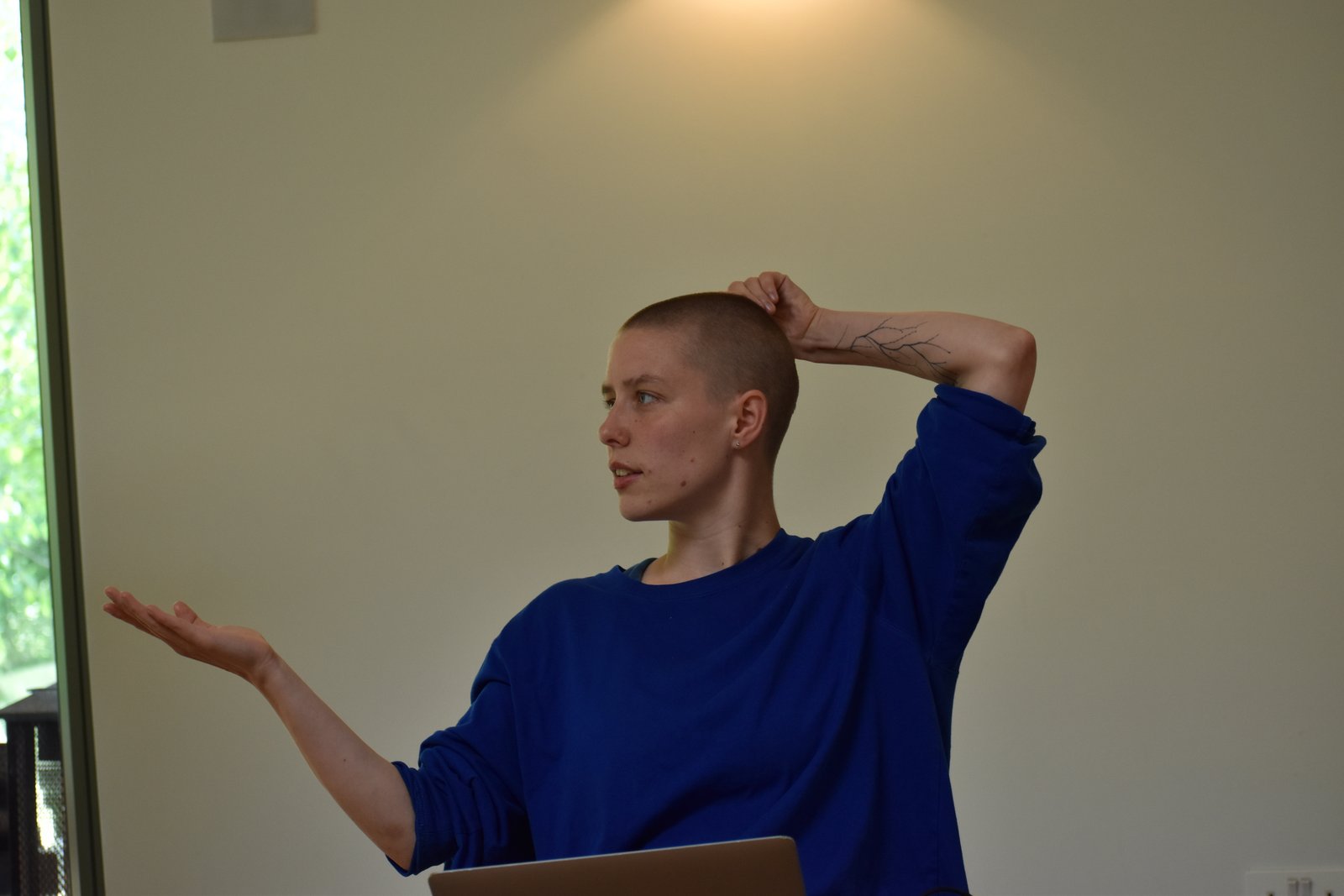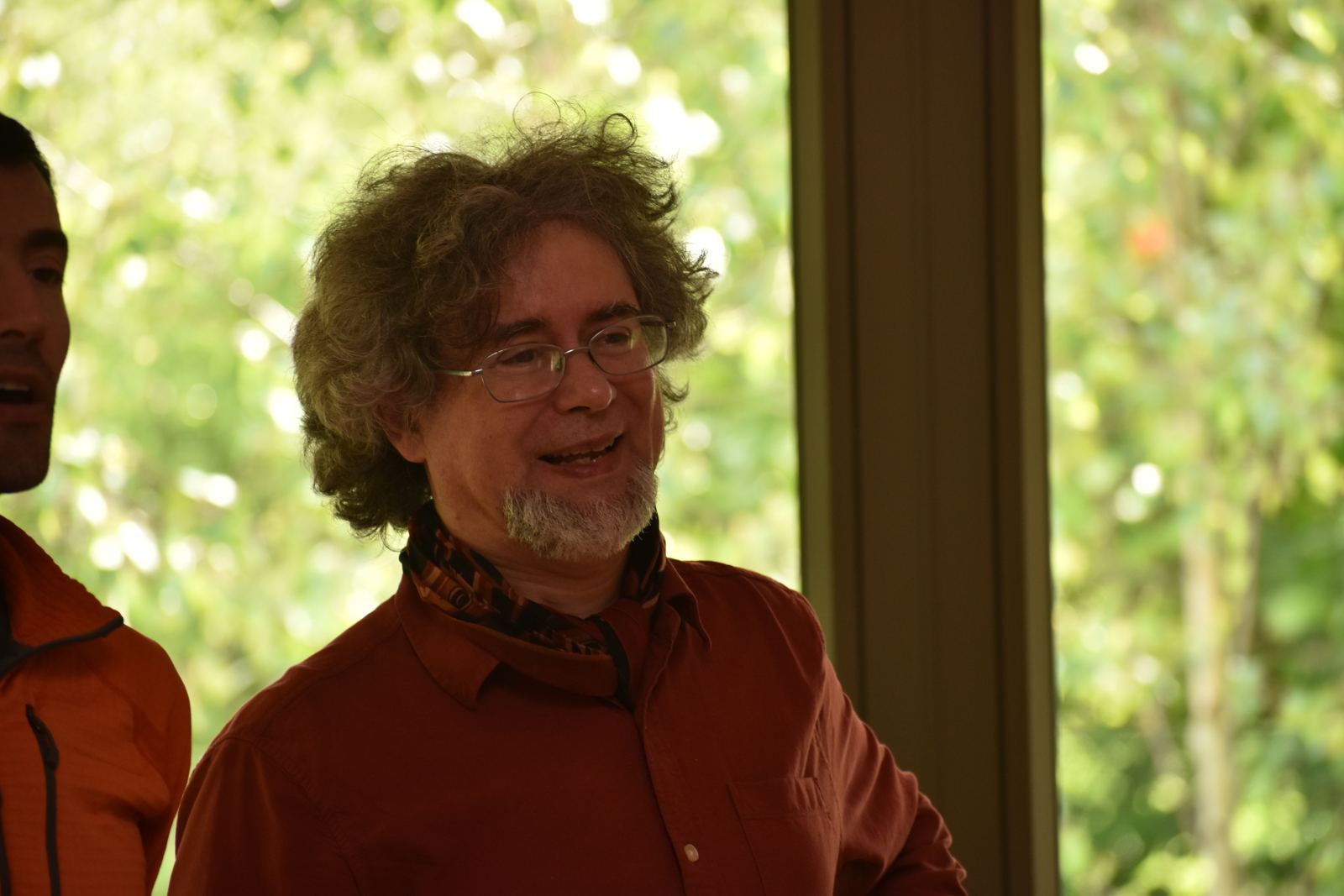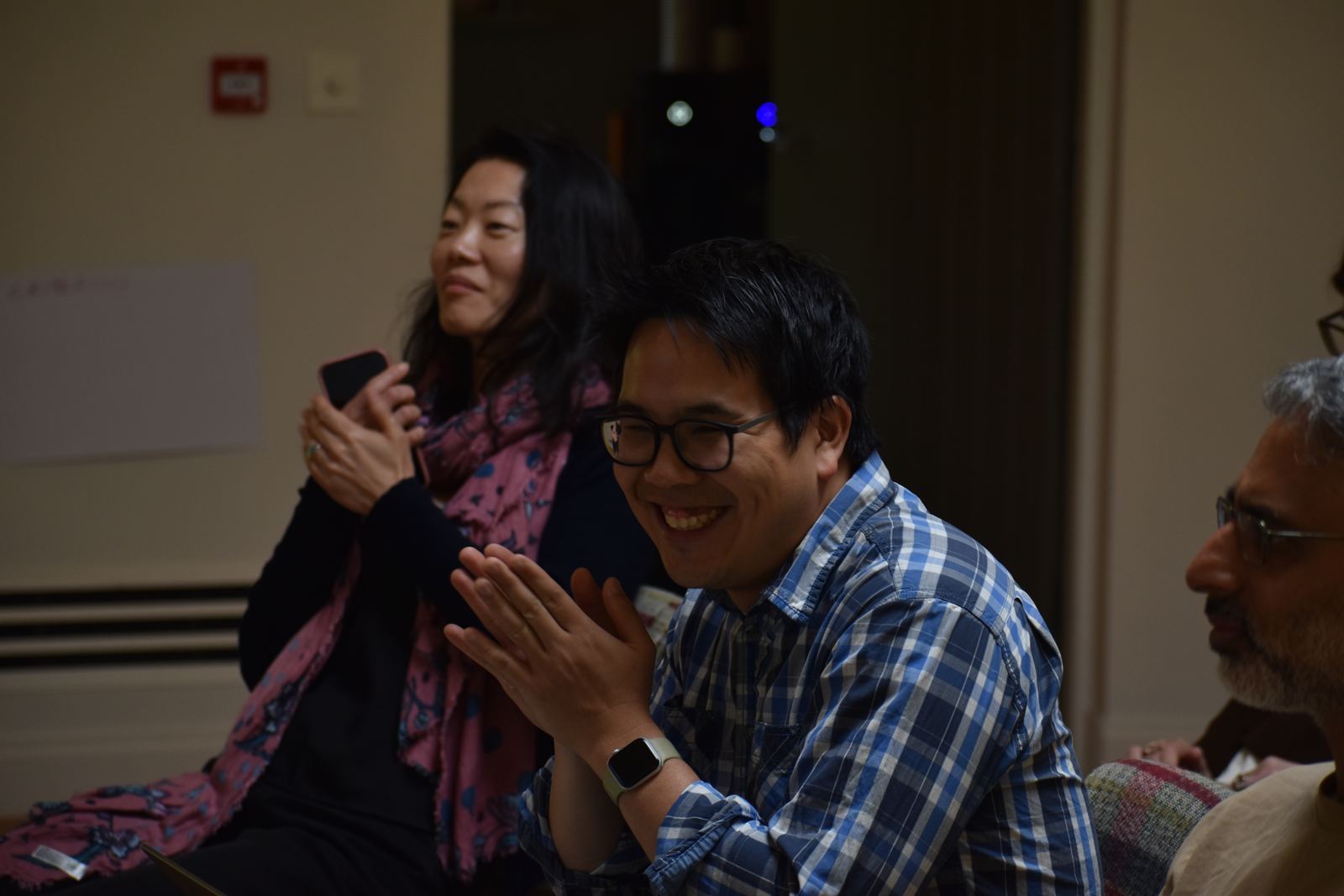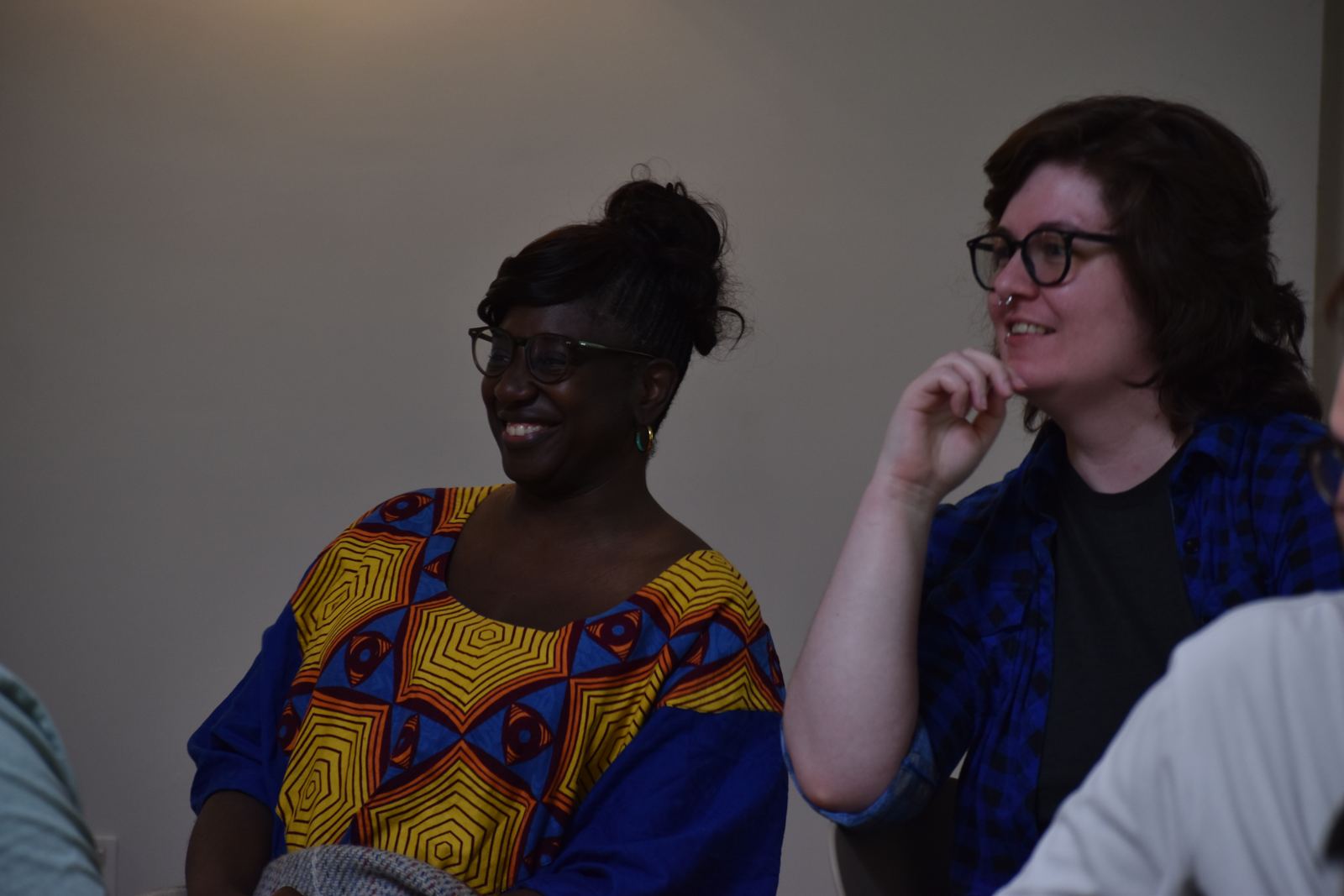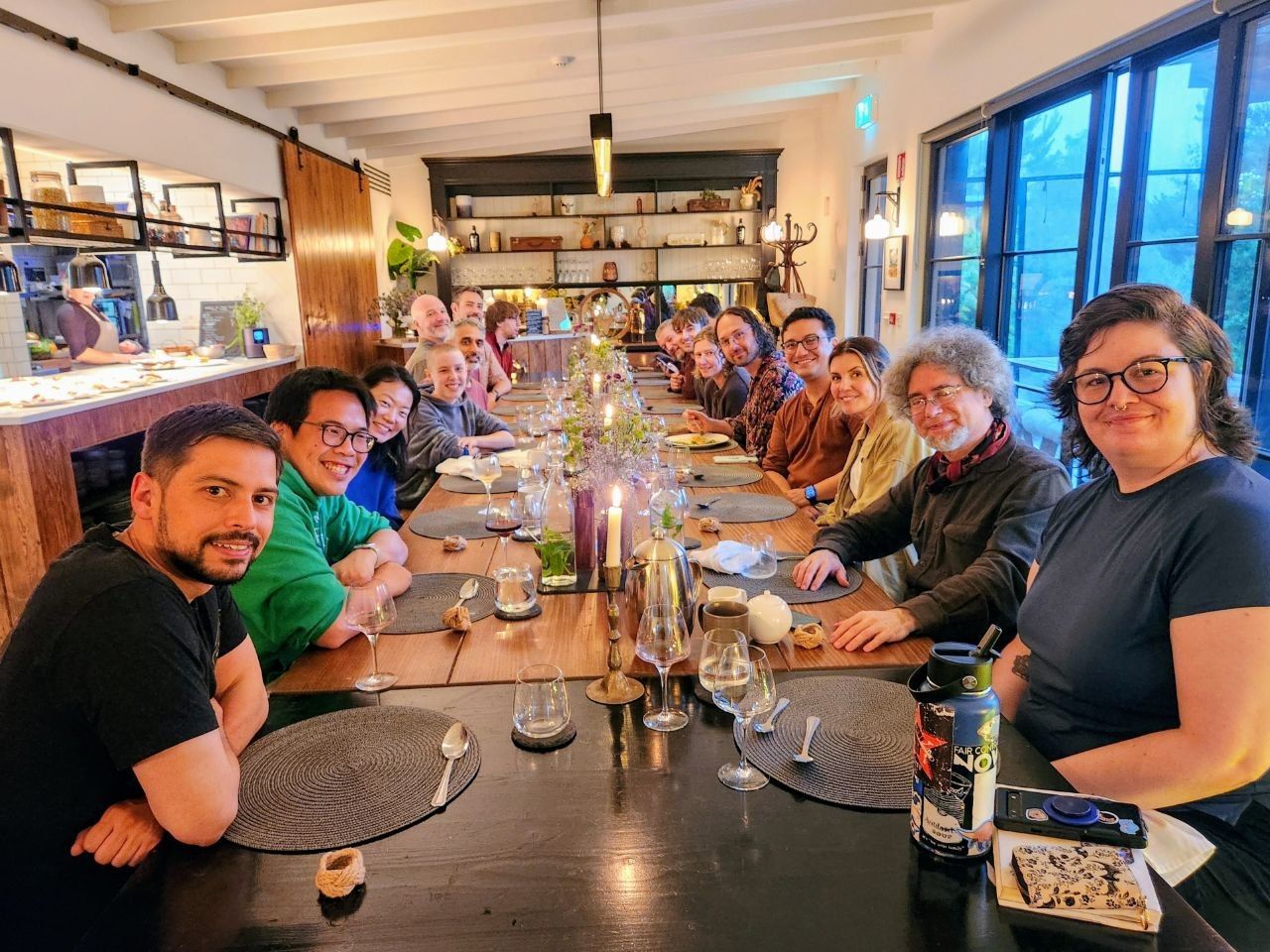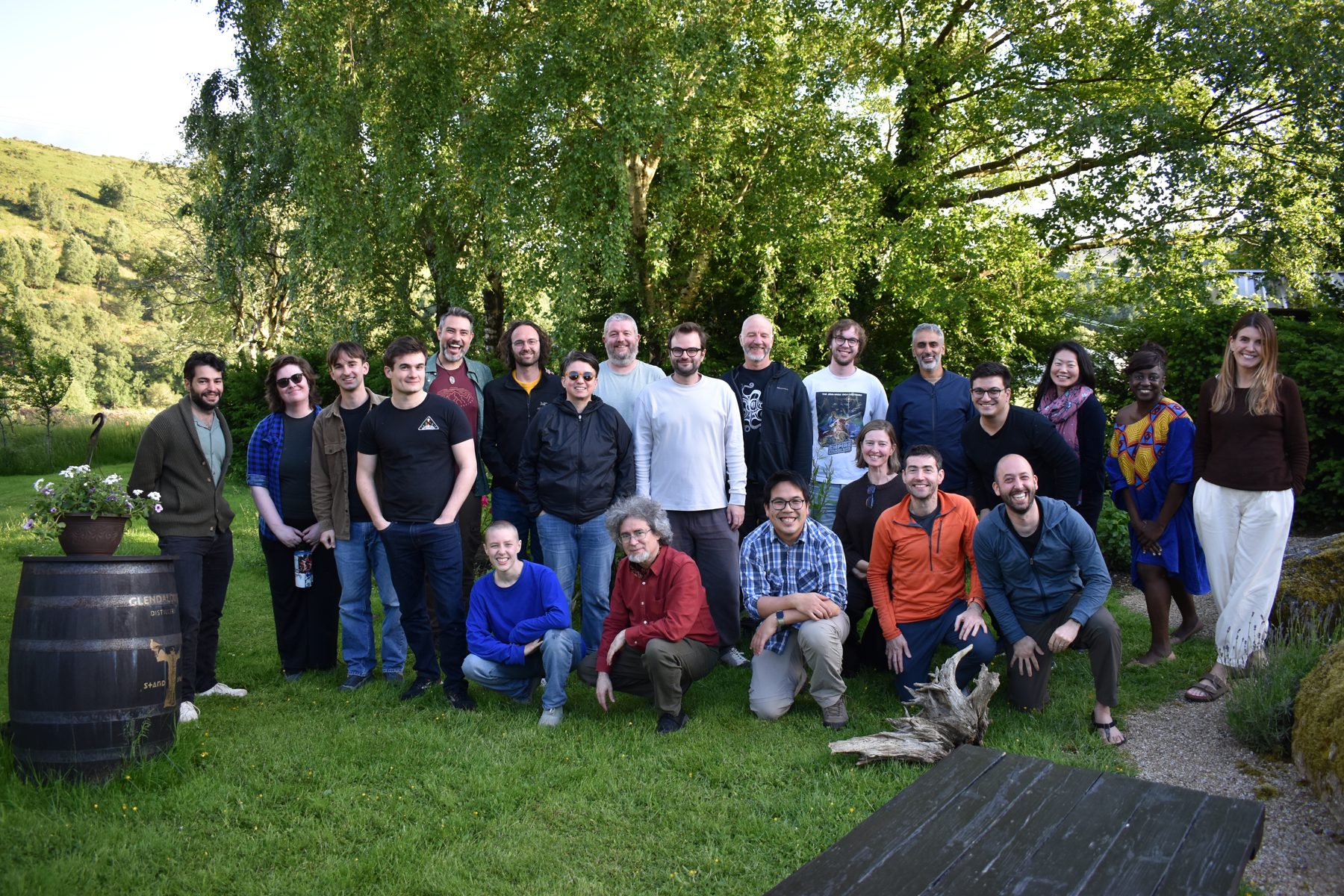
With those ingredients, twenty-five researchers, tool builders, and open-science advocates spent three months building an extensible schema that could serve as the basis for collaborative communication throughout the research process. We then gathered in Ireland to use the schema as a starting point to discuss, scope, and build the early pieces of a modular research ecosystem where research is collaborative by design, transparent by choice, and funded by contribution.
Starting from what we need
We anchored everything in three real user stories:
- b.nextb.next is working to make it possible to build synthetic cells that solve real-world problems, and believes that's only achievable as a community effort. As maintainer of Nucleus, b.next helps build tools for collaborative synthetic cell building — including DevNotes, a technical communication tool built specifically to help synthetic cell builders work better, together.
- The Vogel and Lee LabsA cross-institution collaboration needing to move at the pace of research while maintaining lab separation and privacy.
- A research funderLooking for a credible way to evaluate research proposals and outputs.
We listened to the people who had needs, scoped solutions that might solve their problem, and built the first versions of those solutions.
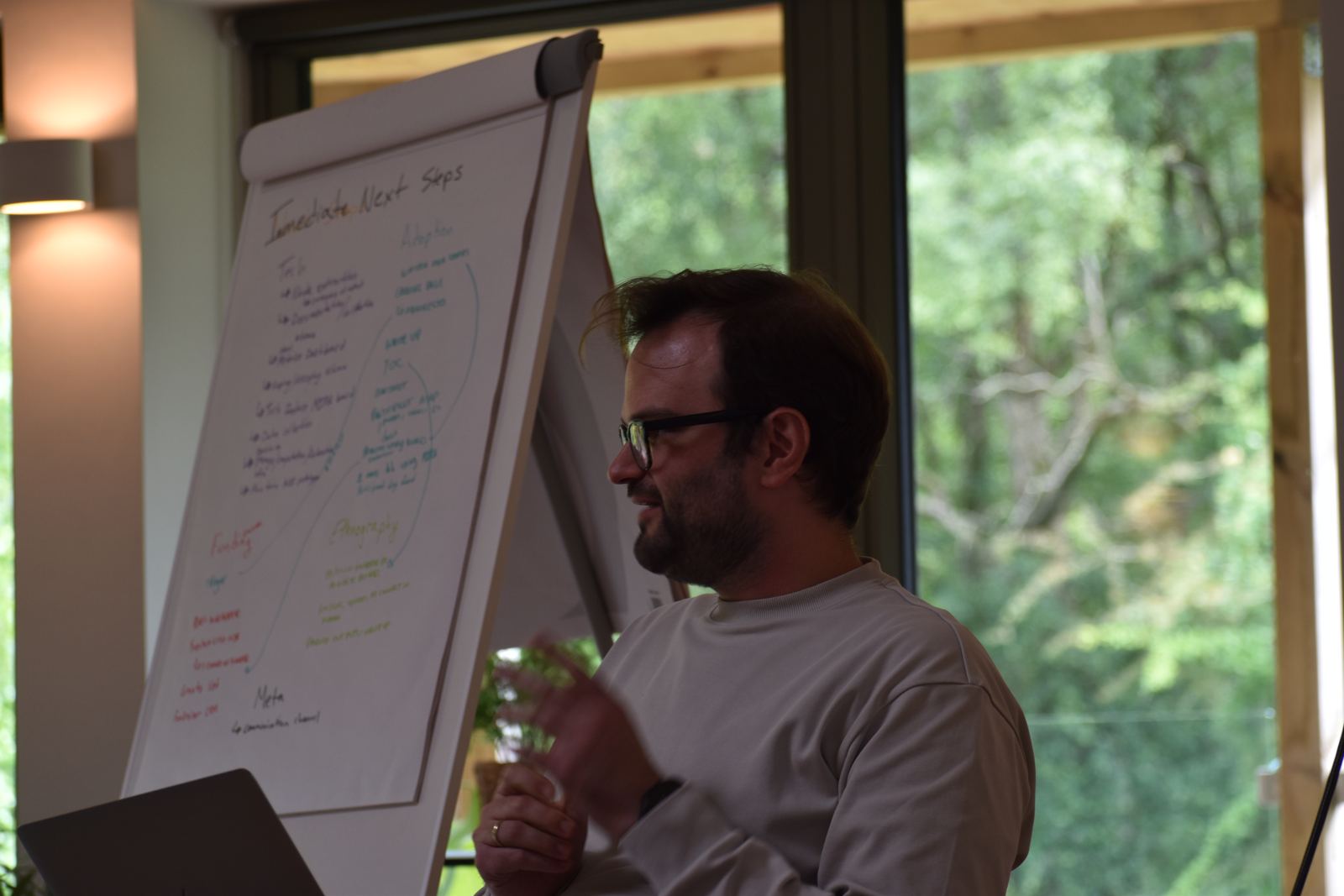
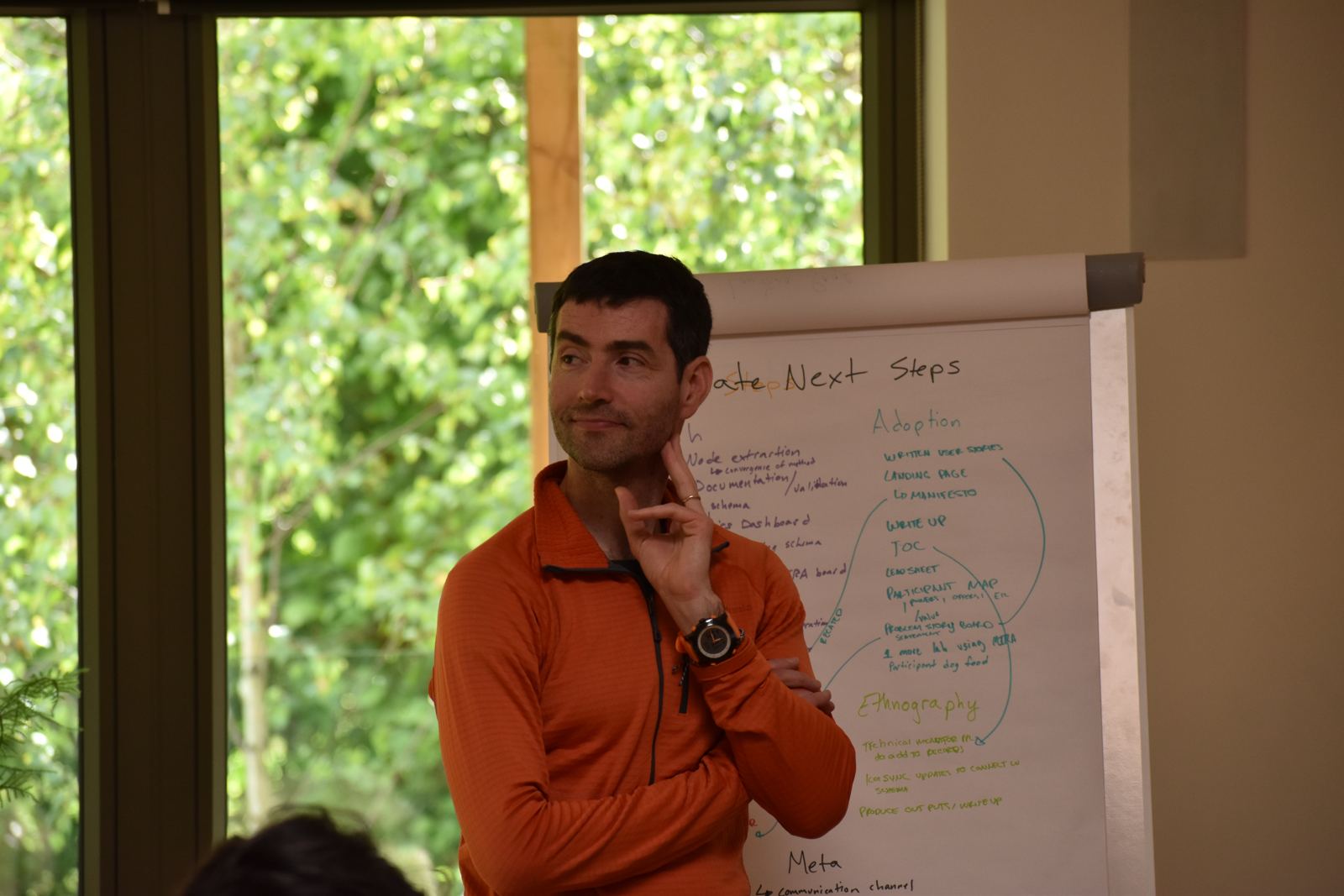
On the first day we defined any work that was not directly related to these use cases and scheduled it into the agenda for the next 4 days. This meant that all four days we were building and talking with users in a tight feedback development loop, and while those conversations were happening anyone not building was discussing the wider needs of the ecosystem. We had sessions on sustainable funding for MIRA, researcher ease of use and onboarding, funder evaluation metrics, building a MIRA homepage, scoping and setting up an ethnography for the event and beyond, and licensing and attribution.
Discuss. Scope. Build. Repeat.
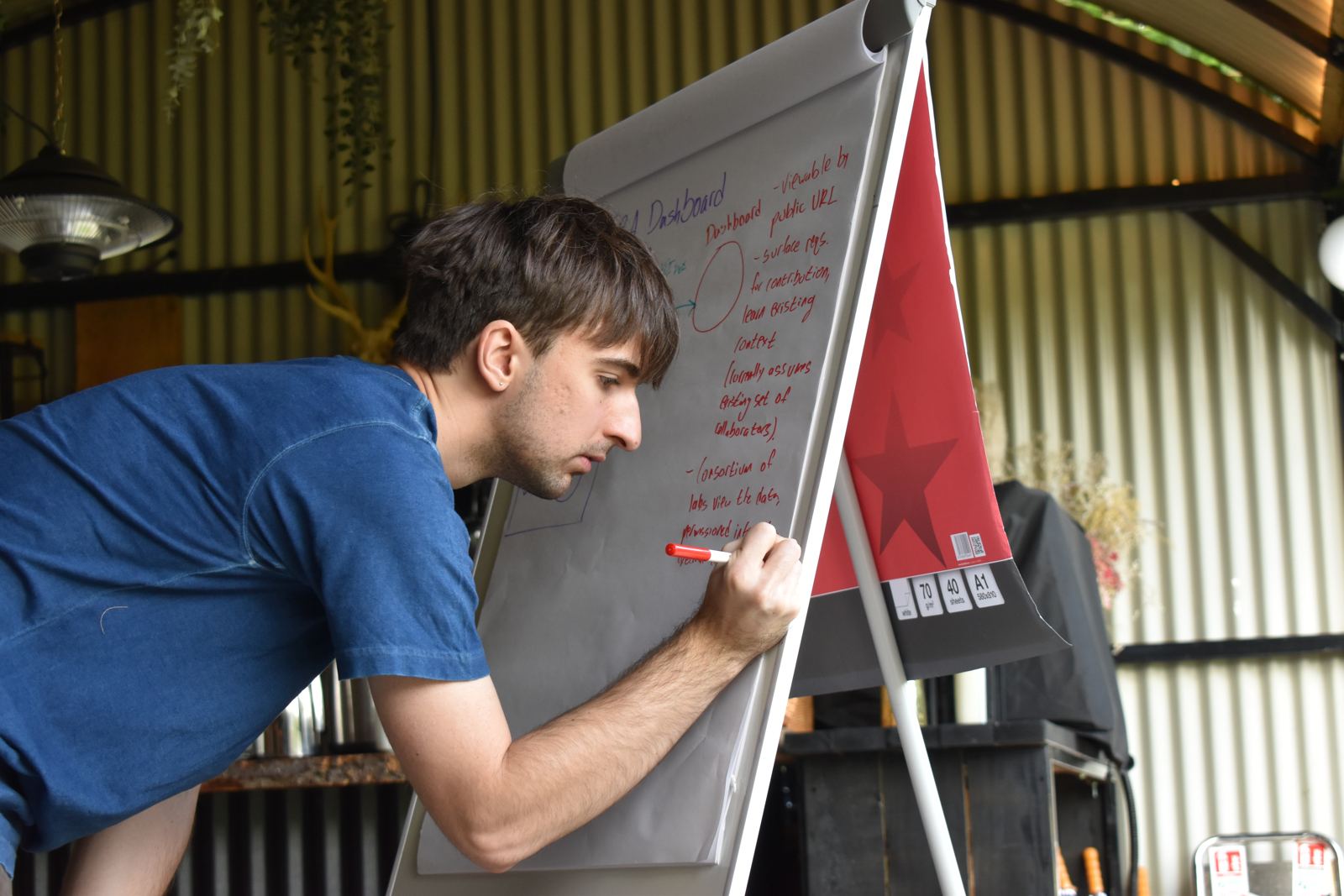
The physical gathering was a rapid, repeating cycle: discuss the need, scope the requirement, build the thing. We ran this pattern against all three stories, then ran it again.
For the b.next synthetic cell engineering network: we discussed what each partner actually needed from a shared ecosystem, and scoped a dashboard for communication. We built the many components of a pipeline to share data to as many places as data might want to be shared with. The components were annotation for MyST markdown documents with MIRA nodes and relations, an annotator and reviewer agent to MIRAfy existing papers as annotations and push the resultant MIRA nodes to the shared database, an annotation-review Chrome extension for the user to review the agent's initial MIRAfication as feedback to improve the tool's accuracy, and a way to integrate MIRA with a preexisting OXA standard. Together it created an integrated web where any researcher working on their local database can push original MIRA elements or decomposed elements from pre-existing paper on the web to a network of apps like Semble, Stencila, or Obsidian.
For the two-lab collaboration: we discussed how a PhD student wants to share research updates with a collaborator straight from their notebook, and how the collaborator would review and give feedback asynchronously. We mocked up a dashboard where they could share critical pieces of their research and practices that reinforced collaboration without flattening either lab's independence. We built out this dashboard that lets a researcher send new outcomes to the other team seamlessly from their own lab notebook, and for the collaborator to send requests back, while keeping private notes private and local.
For the funder's evaluation problem: we built two tracks for this funder.
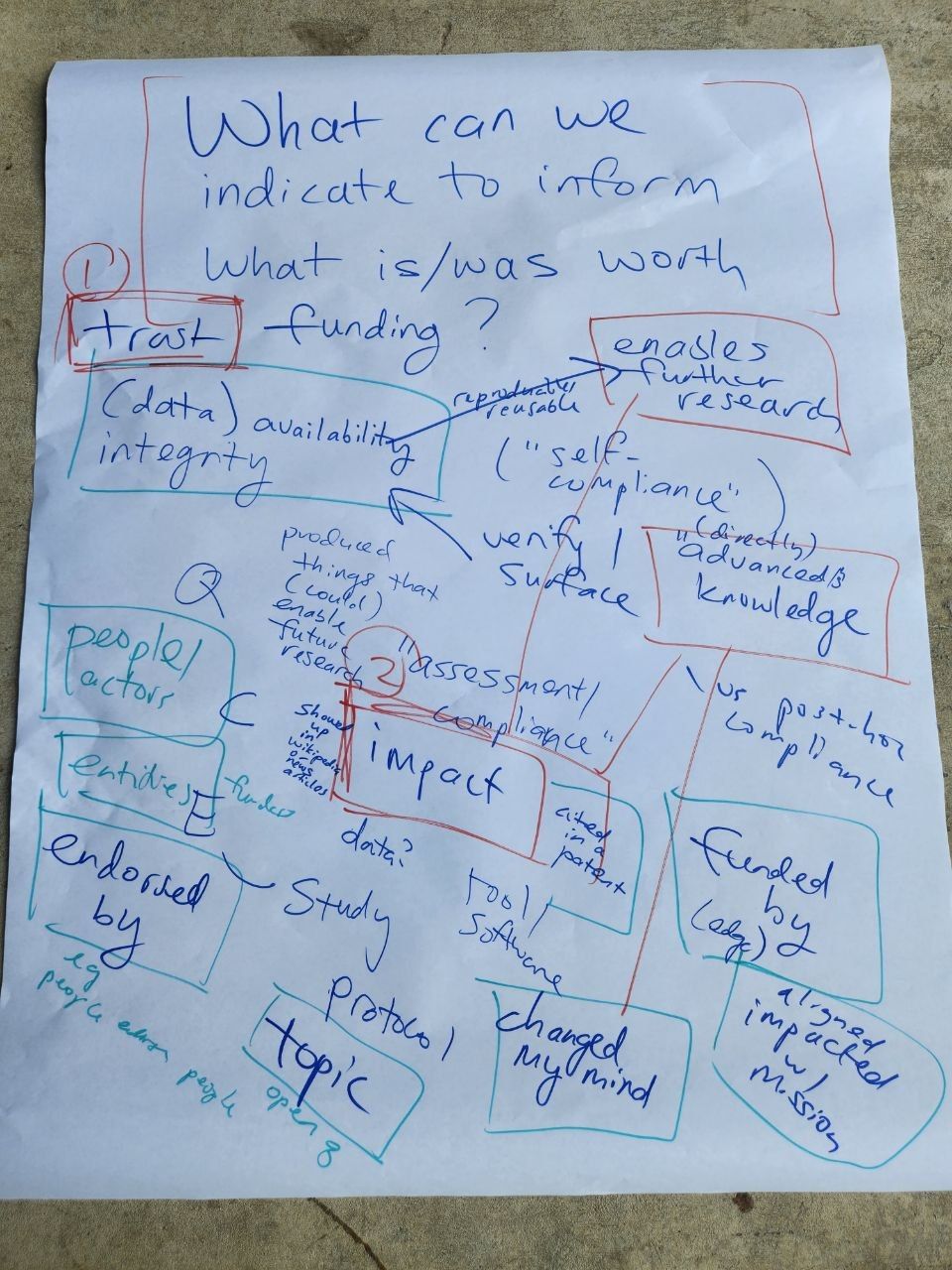
First we discussed how to attribute, evaluate, and reward specialization, what metrics were helpful for demonstrating value to funders, and what we would need to build to make it easy to see prospective and retrospective funding impact. We scoped a database and dashboard that can support various funders to implement flexible and much more varied evaluation methodologies. We built Deltabay, a view on contribution strengths of a scientific discourse to measure the impact of evidence on the answers' credibility of important questions within a scientific topic as one pathway to inform the direction of funds towards impactful research.
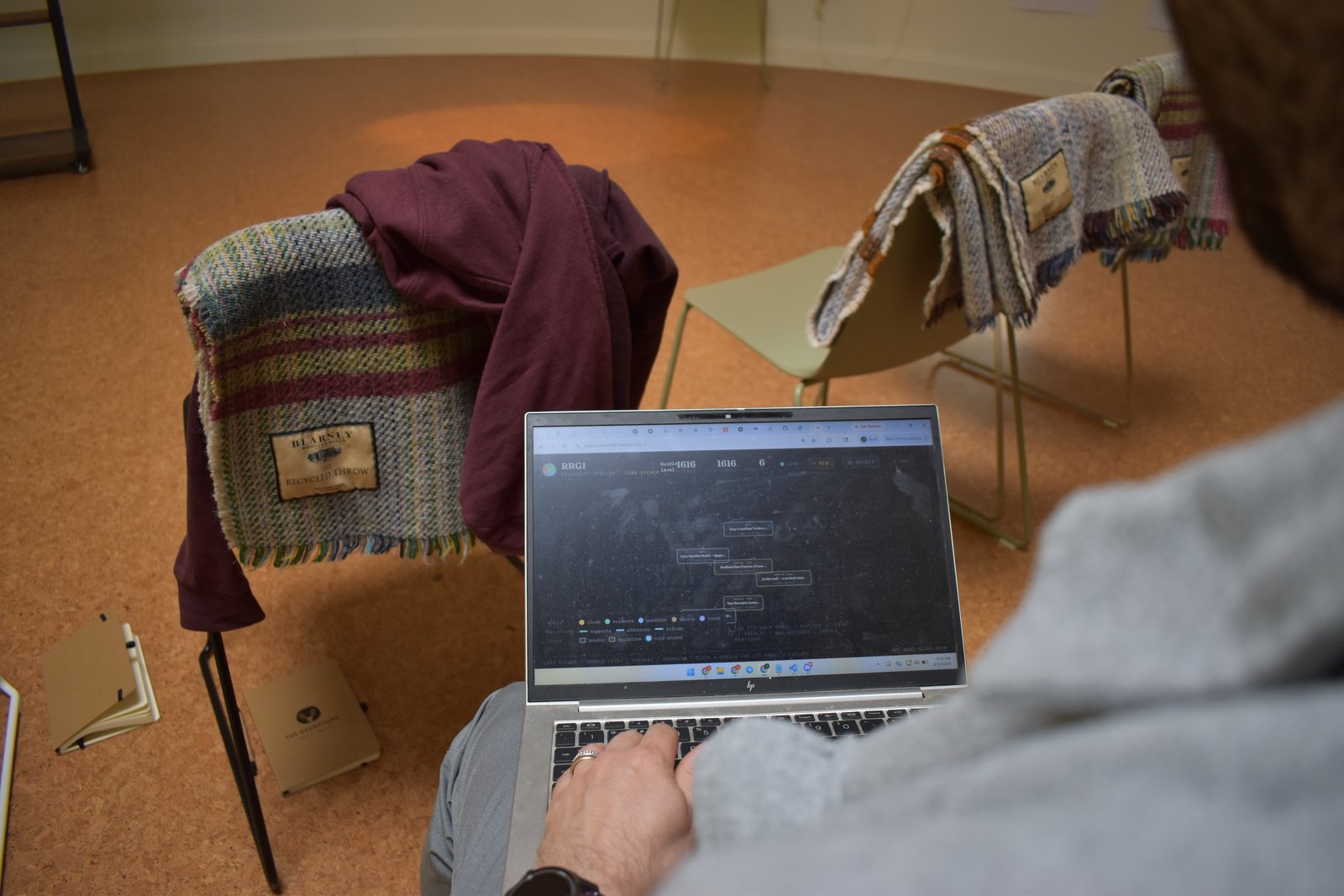
Additionally we defined how to connect organizational vision to a clear RFP and proposal, where all of those elements are broken down into MIRA graphs, enriched with endorsements and other human signals, and utilized to assist in grant screening and selection. We built a MIRA graph extractor which is the first step to prototyping this pathway. This extractor reads a PDF using a free LLM, and generates the MIRA graph ready for human review and endorsements. It is one piece of RRGI, a public graph of MIRA records on AT Protocol and IPFS where those human signals live: signed-in researchers extend the graph with questions and evidence, endorse a claim as believed, verified, or qualified, browse it by field of science, and get an AI reader's suggestions of related methods in distant fields. Every record is signed by its author and pinned to IPFS, so the graph does not depend on any single server, journal, or registry.
Four days later, we had
Six working prototypes.
- MIRA-fierThe modular-evidence transformer.
- MIRA-viewerThe private-by-default cross-lab dashboard. Powered by a schema-aware transport pipeline, sending private MIRA data from discourse-graphs to the MIRA-viewer and Semble through KOI.
- MIRySTA way to extend MyST to contain data for MIRA elements.
- DeltabayA view on contribution strengths of a scientific discourse to measure the impact of evidence on the answers' credibility of important questions within a scientific topic.
- RRGIResilient Research Graph Infrastructure: a public graph of MIRA records on AT Protocol and IPFS, with the PDF extractor, endorsements, and discovery views built in.
- MIROXAA way to integrate MIRA into the preexisting OXA standard within Stencila, an open source publishing platform for dynamic documents.
- A schema tested against these products, available on GitHub with a plain-language explainer, expressed as LinkML with translations into multiple formats, including Turtle, JSON-LD and SHACL, and an initial proof of concept on AT Protocol.
- A live ethnography running alongside the whole event: a self-reflective system where people could share individual thoughts and patterns pulled from their own local Obsidian graphs with each other in real time. The method is the mission.
- A website.
- A shared commitment to building this vision together, complete with a shared board of todos with named owners. Fourteen of the twenty-five people in the room became task leads, and twenty-four of twenty-five raised their hand to keep supporting each other's work over the next four months.
- A next place to gather: we're organizing a workshop at the Institute of Open Science Practices in Leiden, Netherlands on October 12–15th.
- Surprisingly relaxed shoulders, courtesy of cold plunges and sauna time between sessions :)
Some new terms
- MIRAfy (MIRAfication)
- To convert a narrative scientific document into a graph of questions, claims, evidence, and requests.
And then we do it again!
Modular science is just emerging as an ecosystem that needs new ways to distribute funding, make research visible as it happens, localize and distribute data, and track and reward specialization properly. We can only do so much in four days…
Join us at IOSP, where we'll build on the vision and invite you to join!